
Why coverage drops in basements, hotels and offices, how a repeater differs from a DAS, and how a boosting project runs from survey to handover.
Azenet · Mühəndis sistemləri və təchizat
Azenet · Инженерные системы и поставки
Azenet · Engineering systems & supply
Weak mobile signal inside a building: why it happens and how to fix it
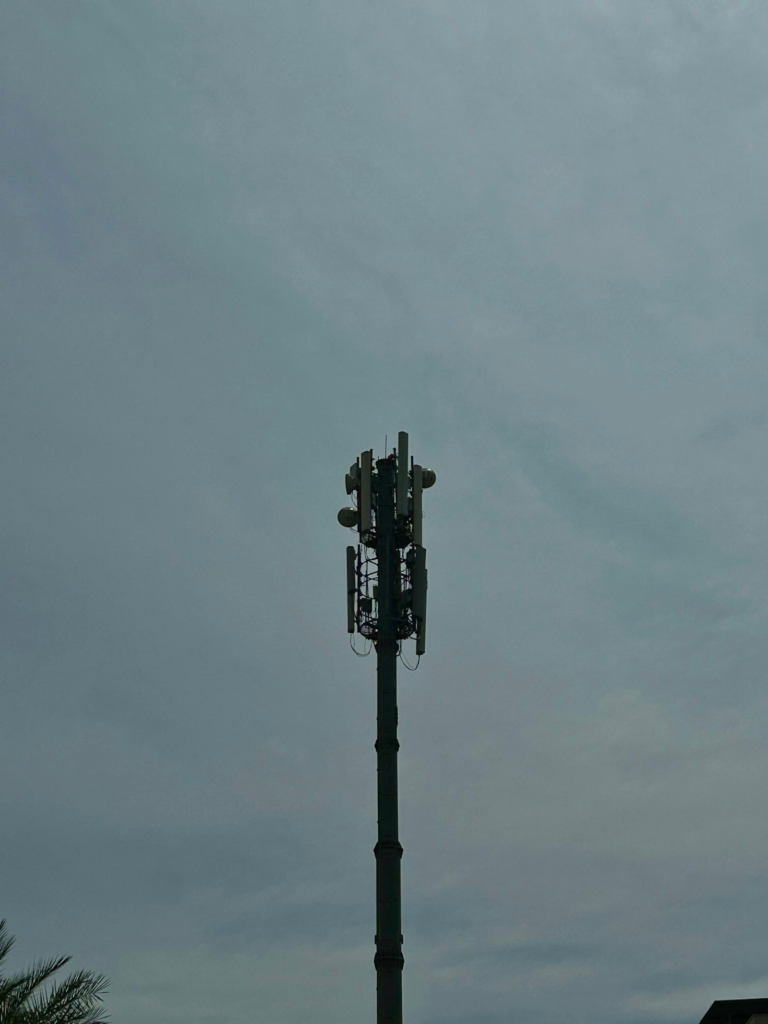
Full bars on the street, but “No service” in the basement, the meeting room or a hospital corridor. Calls drop, messengers will not send photos, card terminals hang. Here is where the problem comes from and how it is solved.
Why the signal is lost inside a building
- Concrete and rebar. Thick slabs and walls with steel weaken radio signals considerably.
- Energy-efficient glazing. The metallic coating on modern double glazing lets very little signal through.
- Basements and lower ground floors. The base station signal simply does not reach them.
- Large floor areas. In long corridors, warehouses and shop floors the signal fades as you move away from the windows.
- Many users in one place. In hotels, business centres and hospitals the network gets congested even where there is some signal.
What the options are
A repeater with a donor antenna. A donor antenna on the roof or facade picks up the operator’s signal, the repeater amplifies it and indoor antennas distribute it through the rooms. A good fit for basements, single floors, offices and warehouses.
A distributed antenna system (DAS). For large buildings such as hotels, hospitals and business centres. The signal is distributed over coaxial cable through splitters and couplers to dozens of ceiling antennas, giving even coverage on every floor with antennas that barely show in the interior.
Operator solutions. On large sites the operator may install its own equipment, such as small cells. In that case we prepare the site: cable routes, power and mounting positions.
How a project runs
- Survey. We measure each operator’s signal level and quality floor by floor and map the dead zones.
- Design. We select equipment for the operators and bands needed and calculate power, the number and positions of antennas and the cable routes.
- Installation. We install the donor antenna and repeater, run cable in the suspended ceiling and fit the indoor antennas, working carefully on occupied sites too.
- Tuning and handover. We set the gain so the system does not interfere with the operator’s network, take control measurements and hand over the documentation.
Worth knowing in advance
- Use certified equipment only. Cheap untuned “boosters” often interfere with the network and end up being shut down by the operator.
- The system should support every operator your staff and guests use, not just one.
- Planning cable routes during a renovation or fit-out is easier and cheaper than opening finished ceilings.
Our experience
Azenet has boosted mobile coverage at the InterContinental Baku hotel, in departments of DTX Hospital and on a basement level in central Baku built with CommScope passive components. If your site has areas without coverage, get in touch: we will come for a survey and propose a solution that fits your budget.